Zeme pirms pēdējās / Land before Last
video un skaņas instalācija / video and sound installation, 17:58 min
2024/2025
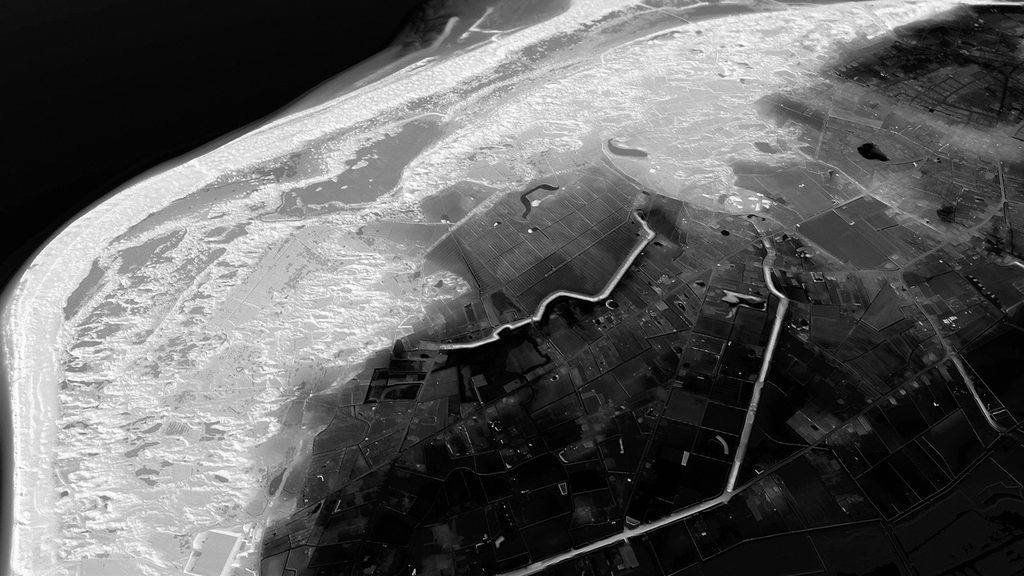
Still image, Land before Last, 2024 / 2025
Darbs filmēts Nīderlandes digitālajā reljefa modelī. No topogrāfiskajiem reljefa datiem ir izdzēsta visa cilvēka radītā apbūve, veģetācija un jebkāda dzīvība, tāpēc cilvēku apdzīvotības pēdas var atpazīt vienīgi pēc nospiedumiem, ko tie atstājuši reljefā. Rezultātā ainava atgādina plašu arheoloģisko izrakumu vietu. Video pavadošais skaņu un teksta celiņš, kas plūst cauri telpai un virza skatītāja domas dažādos, reizēm asociatīvos virzienos, tapis sadarbībā ar mākslinieci ANOHNI. Nav skaidrs, kur uz laika ass atrodies un kurā virzienā skaties – nākotnē vai pagātnē. Tomēr ainavas reljefā iezīmētās vagas un rētas atklāj, cik vērienīgi cilvēks gadsimtu gaitā pārveidojis un pielāgojis apkārtējo, apbūvējot un paplašinot savu dzīves telpu. Vairs nav iespējams pateikt, kas izraisīja tās izzušanu. Taču visas dzīvības izdzēšana šajā darbā šķiet kā vēstures izdzēšana. Mūsu priekšā paveras atmiņu ainava, kurai atņemti tās liecinieki, stāsti un vēsture. Tieši šis absolūtais tukšums mudina aizdomāties par to, ko šī šķietami nereālā, taču nebūt ne izdomātā ainava vēsta par mūsu tagadni.
Land before Last was filmed in the digital terrain model of the Netherlands. All human development, vegetation and any life are erased from the topographical terrain data, so that the traces of human settlement can only be recognised in the imprints they have left on the terrain. As a result, the landscape appears as a vast archaeological site.
The accompanying audio track of sound and text, which meanders through the space and drives the viewer’s thoughts in different, sometimes associative directions, is a collaboration with the artist ANOHNI.
It remains unclear where you are on the timeline and in which direction you are looking – the future or the past. However, the topography of furrows and scars reveals the enormous changes and adaptations that humans have made to the landscape over centuries of building, altering and expanding their habitat. It is no longer possible to say what caused its disappearance. But the erasure of all life in Land before Last feels like an erasure of history. We are experiencing a landscape of memory that has been stripped of its witnesses, of its narratives and histories. It is precisely this complete emptiness that calls us to reflect on what this seemingly unreal, but by no means fictional, landscape tells us about our present.
Mākslas darbs radīts Eiropas mediju mākslas platformas (EMAP) rezidences ietvaros IMPAKT Mediju kultūras centrā Utrehtā,
Nīderlandē. / Produced during the EMAP residency at IMPAKT [Centre for Media Culture], Utrecht, the Netherlands