CLIMATE IMAGINATION
RIXC ART SCIENCE FESTIVAL 2026
When
22–23 October 2026
Exhibitions on view until 12 December 2026
Where
Riga, Latvia
The National Library of Latvia and RIXC Gallery
Free registration via Eventbrite
Register NowABOUT
This year’s RIXC Art Science Festival explores CLIMATE IMAGINATION as a cultural and scientific field where art, technology, and environmental research intersect. As climate change reshapes ecosystems, infrastructures, and everyday life, the festival aims to bring together artists, researchers, and practitioners to explore imagination as a critical capacity for sensing and rethinking our relationships with the Earth.
Festival: 22–23 October 2026, National Library of Latvia, Riga, Latvia
Exhibitions: on view until 12 December 2026, National Library of Latvia and RIXC Gallery, Riga, Latvia
Call for short presentations and workshop participation – send your proposal and brief email
of interest to rixc@rixc.org until 10 October (deadline extended)!
Registration for attending/participating in symposium – free of charge – is open already via Eventbrite.
EVENTS
,
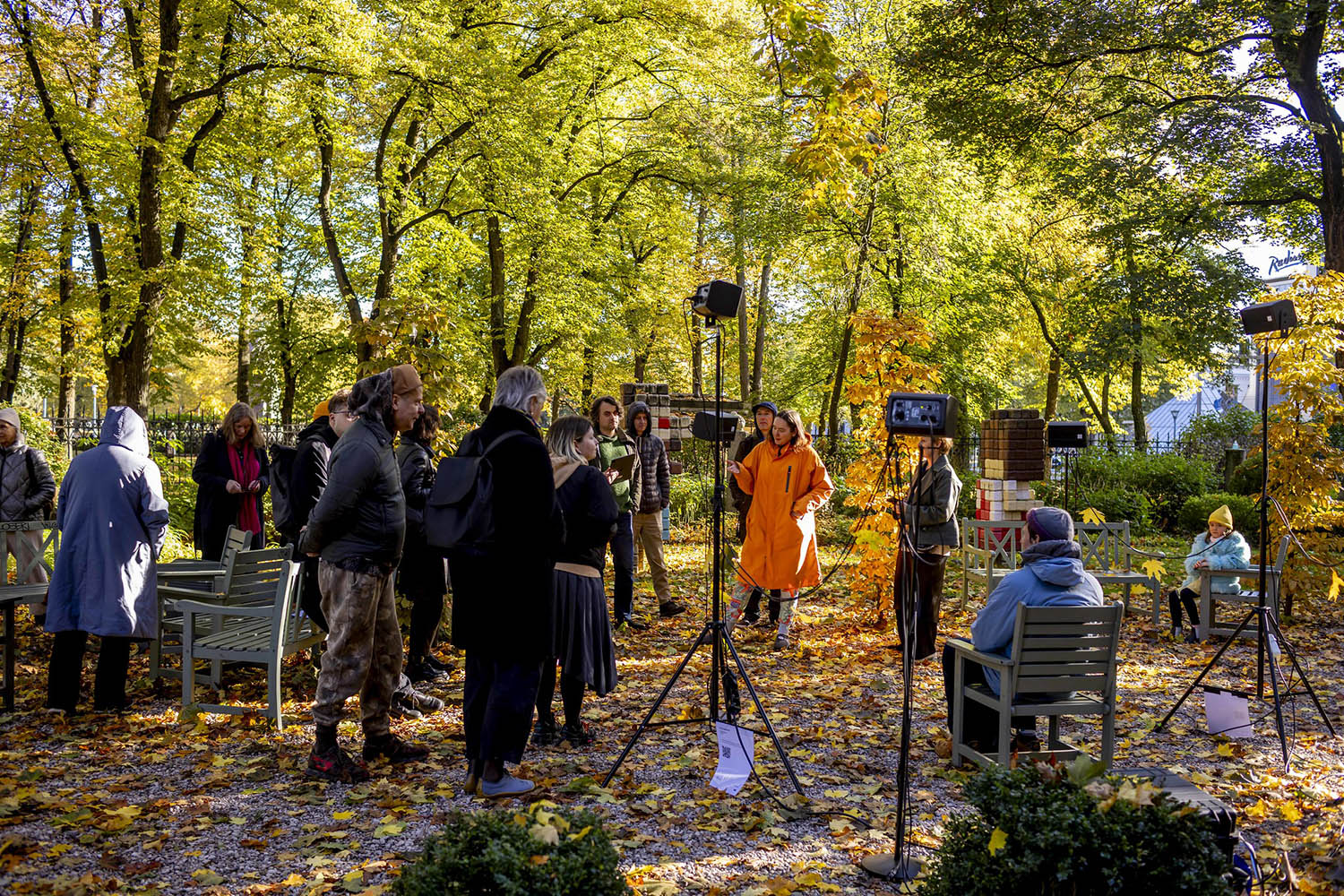
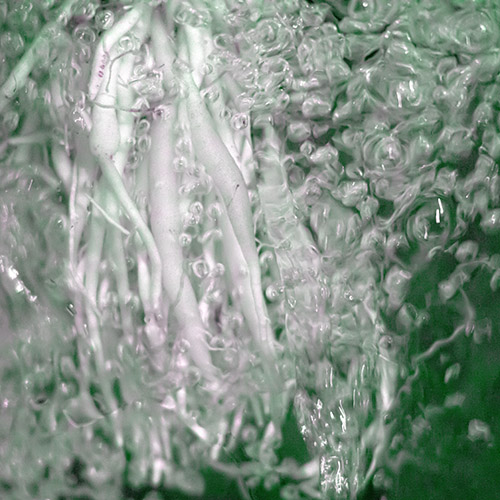
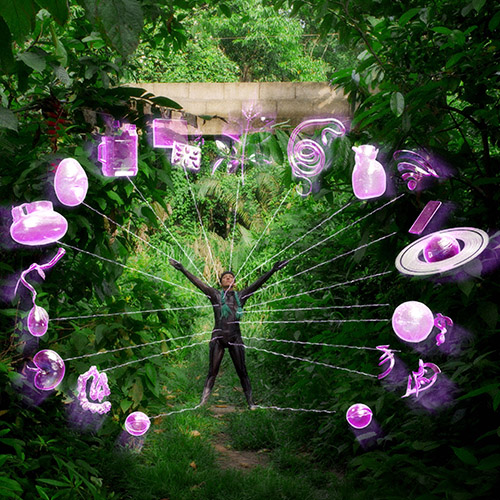
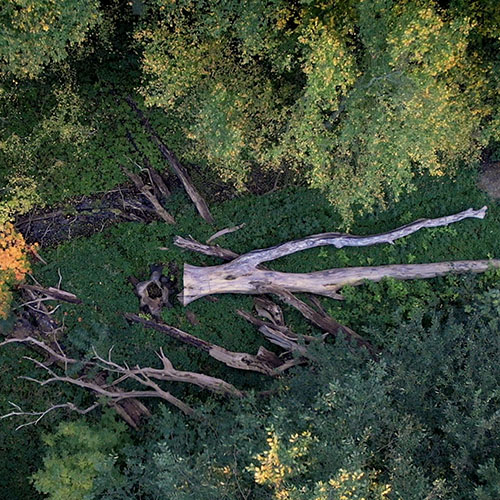
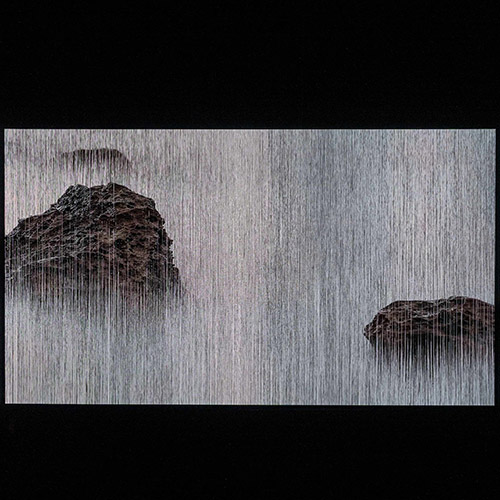
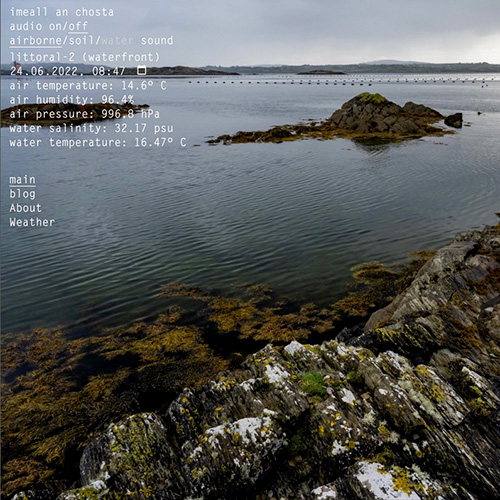
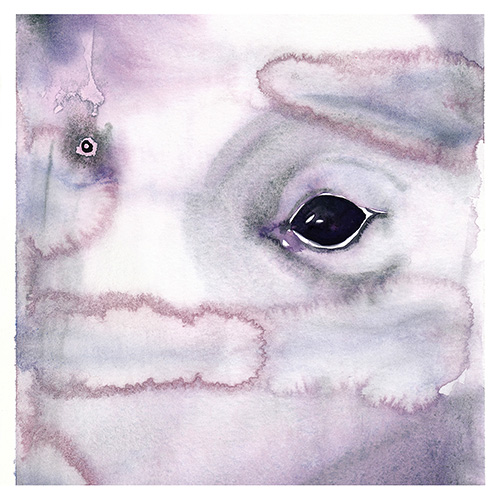
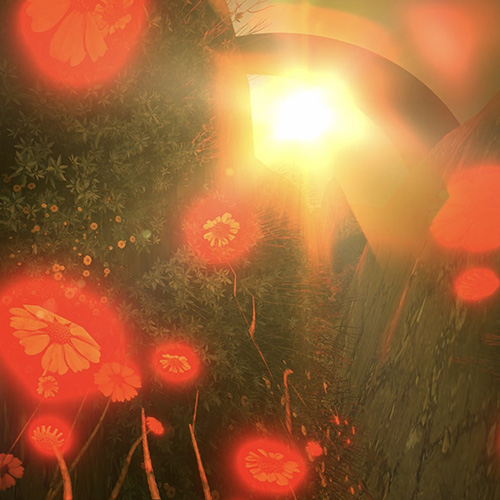
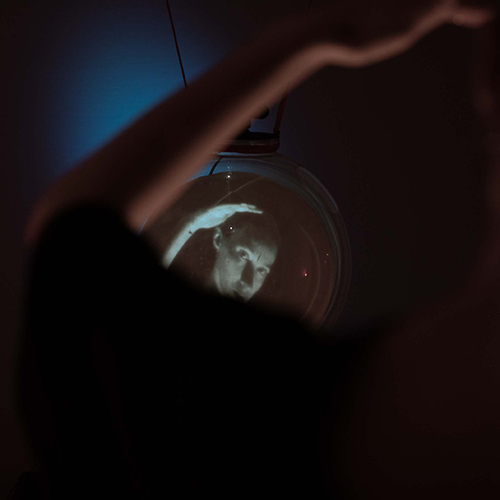
The festival’s exhibitions, symposium, and workshops aim to create multisensory encounters with environmental change, exploring how artistic practices – from immersive media and XR to data visualisation and environmental sensing – can expand how climate processes are perceived and imagined.
Festival exhibition artists: Maija DEMITERE (LV), Patricia DOMINGUEZ (CL), Anne Duk Hee JORDAN (KR/DE), Pauline DOUTRELUINGNE (BE/DE), Ryu FURUSAWA (JP), Marcus MAEDER (CH), kennedy+swan (DE), knowbotiq in collaboration with Pablo Torres (CH/AT/CO), Jurģis PETERS (LV) in collaboration with Laura BELOFF (FI), Mārtiņš RATNIKS (LV), Rasa SMITE (LV/CH), Raitis SMITS (LV), Benedikt TERWIEL in collaboration with ANOHNI (DE/US).

Keynote by Philippe Sormani
Rewilding the Lab: Instructive Evidence from Post-Normal Practice
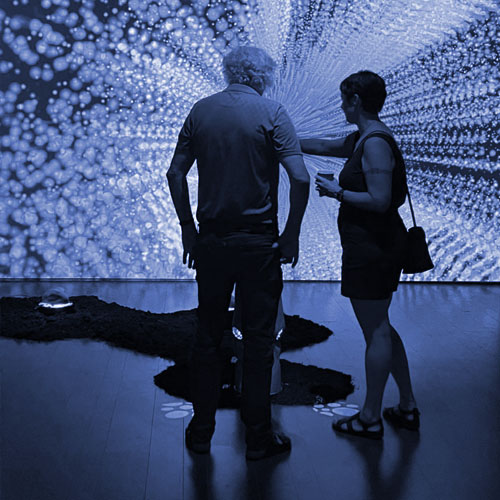
SensUs XR Showcase:
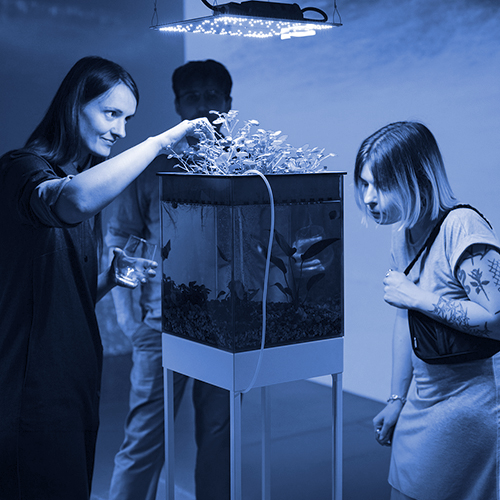
On Extending Climate Realities
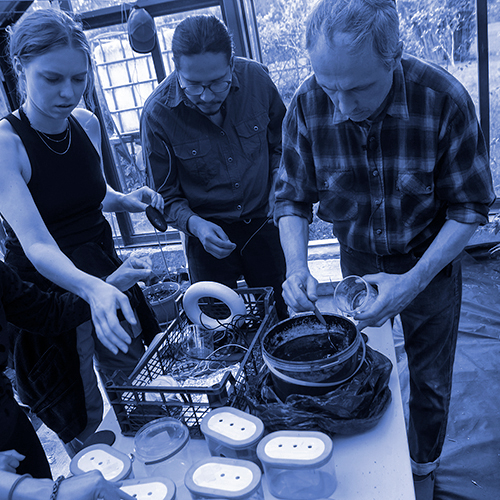
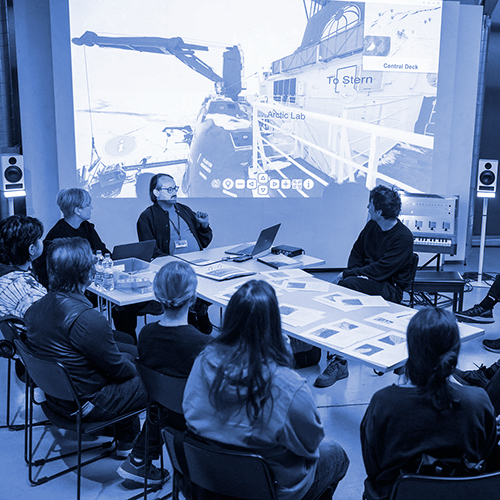
Workshop with Jane Tingley and Rasa Smite
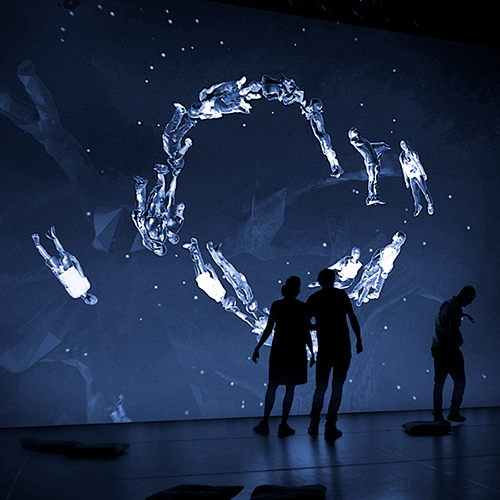

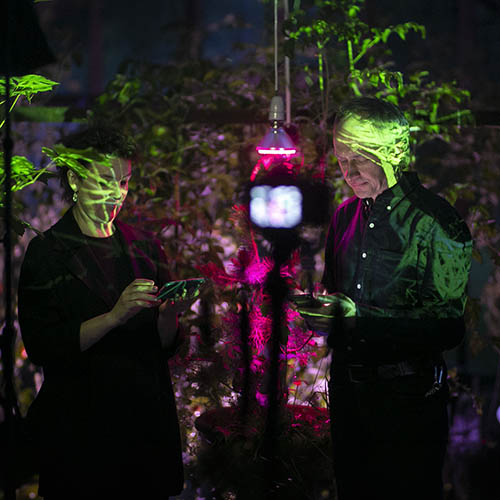
knowbotiq in collaboration with Pablo Torres
TUMBLE_needs Let’s play syncretistic abundance

PROGRAMME
EEST, UTC +3, CEST+1
NB! The time zone below is Riga time / EEST - Eastern European Summer Time (UCT +3)
please use http://time.is to double-check your time zone
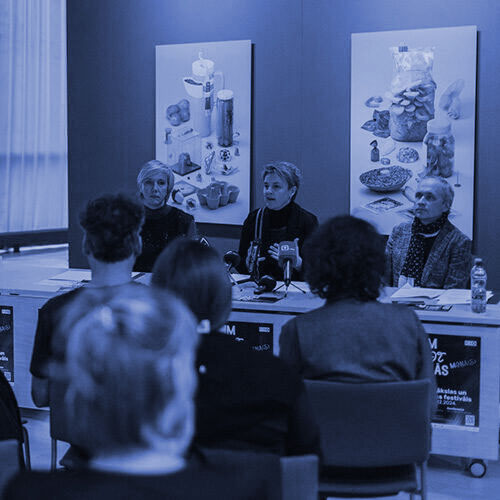
Press Conference
National Library of Latvia, Mūkusalas iela 3, Riga, Exhibition Hall, Level 0
Session 1: Baltic ArtS TS: On Artistic Experimentation. Workshop with Philippe Sormani
National Library of Latvia, Mūkusalas iela 3, Riga, Conference Center, Level -1
Keynote by Philippe Sormani
Rewilding the Lab: Instructive Evidence from Post-Normal Practice
National Library of Latvia, Mūkusalas iela 3, Riga, Conference Center, Level -1
Rewilding the Lab: Instructive Evidence from Post-Normal Practice
Philippe Sormani
(STS lab, University of Lausanne / Immersive Arts Space, Zurich University of the Arts)
Laboratory work routinely leads to scientific findings and technological innovations. How? From the 1970s onwards, ethnographic studies have described “research in the making” in answer to the raised question. Ethnographic descriptions of science-at-work recovered the multiplicity of methods, prosaic and protracted, that lab work routinely draws upon, in and its everyday practice. As a sociotechnical endeavour, this multiplicity proved irreducible to any single ideal of scientific method or formal model of (physical) reality, not to mention overly virtuous pictures of the individual scientist. Also, for an evolving set of laboratory methods to take hold of society more broadly, society had to be controlled and construed in its image, be it Pasteur’s hygiene protocols for livestock breeding (Latour, 1987) or digital infrastructure for “autonomous vehicle” testing (Marres & Stark, 2020).
Shouldn’t there be limits to “laboratizing the world” (Guggenheim, 2012), however? Science, technology, and industry indeed happen to be ecologically embedded, environmentally consequential, and interestingly contingent. In a programmatic paper, Funtowicz and Ravetz (1993) coined the metaphor of the “reinvasion of the laboratory by nature” (p. 741) to highlight the self-destructive tendencies of overextended technological systems. As an alternative model, they pleaded for “post-normal science” in public policy expertise, a model that re-embedded scientific expertise in “extended peer review” in response to ecological crisis, environmental and existential, factual and normative. Thirty years on, the spectre of polycrisis, multiple “co-existence trials” and contradictory responses to them, including both calls for radical change and hyper-normalization of everyday routines, beg the question of political engagement and adequate expertise, if not “post-normal practice” and ideology critique (e.g., Marres, 2025; Sormani, 2024; Thorpe, 2022).
Against this backdrop, the present talk exemplifies and reflects on “rewilding the lab” as a heuristic move of reflexive ethnography, on the one hand, and a performative intervention of critical interest, on the other. Ethnographically, the talk revisits a series of “normal experiments” in and across art, science, and technology. Each of the revisited experiments lays claim to an independent, abstract and yet real-worldly phenomenon (e.g., a “material property”, a “virtual reality,” an “artificial intelligence”), regardless of its local production, mediated expression, and multiple contingencies. Conversely, the reflexive involvement of the video ethnographer will be explicated for its heuristic value, allowing us to make explicit just that circumstantial production, in and as its ordinarily constitutive practices – in situ and in vivo. Critically, then, the talk probes reflexive involvement for alternative aesthetics, including other kinds of sociotechnical arrangement, if not “vibrant experimentalism” (Marres, 2026). As a performative intervention, it will allow us to reflect on intertwined genealogies of laboratory ethnography, evidence, and ecology, while considering recent pleas for art, science, and technology studies (e.g., Rogers et al., 2021) – experimental or other.
References:
Funtowicz, S.O. & Ravetz, J.R. (1993) “Science for the Post-Normal Age,” Futures 25(7):735–755.
Guggenheim, M. (2012) “Laboratizing and de-laboratizing the world: changing sociological concepts for places of knowledge production,” History of the Human Sciences 25(1):99–118.
Latour, B. (1987) “Give Me a Laboratory and I will Raise the World,” in Knorr Cetina, K. & M. Mulkay (Eds.) Science Observed: Perspectives on the Social Study of Science. London: Sage, pp. 141-170.
Marres, N. (2025) “The Postnormal Society: On Trials of Co-Existence in Everyday Environments.” Preprints SocArXiv 1–25. Available at: https://osf.io/preprints/socarxiv/xupgf_v1 (Accessed 10 June 2026).
Marres, N. (2026) “The Second Creation and the Destruction of Worlds”, The Ideas Letter #72 “La fin.” Available at: https://www.theideasletter.org/essay/the-second-creation-and-the-destruction-of-worlds/#41552b93-1c80-449a-abee-ef25a623f40d-link (Accessed 20 September 2026).
Marres, N. & D. Stark (2020) “Put to the test: For a new sociology of testing,” The British Journal of Sociology 71(3):423-443.
Rogers, H. S., Halpern, M.K., Hannah, D. & K. De Ridder-Vignone (Eds.) (2021) Routledge Handbook of Art, Science and Technology Studies. London & New York: Routledge.
Sormani, P. (2024) “Renormalizing Science? Postanalytic Inquiry for Post-Normal Times*”, Ethnographic Studies 20:268–295.
Thorpe, C. (2022) Sociology in Post-Normal Times. Lanham: Lexington Books.
Philippe Sormani (PhD in Sociology) is a Senior Researcher at the STS Lab at University of Lausanne and the Immersive Arts Space (IAS) at Zurich University of the Arts. Drawing on science, technology and media studies, he has published on experimentation in and across different fields of activity, ranging from experimental physics to artistic experiments and technology demonstrations. Currently, he is experimenting with “extended reality” (at IAS), while (re-)engaging “new AI” (at STS Lab and beyond). Key publications include Respecifying Lab Ethnography (Routledge 2016), the co-edited volume Practicing Art/Science (Routledge 2019), and “Interfacing AlphaGo” (Social Studies of Science, 2023). He also is an affiliated member of CEMS/EHESS in Paris
Official Festival & Exhibition Opening: CLIMATE IMAGINATION
Artists: Maija Demitere, Patricia Dominguez, Anne Duk Hee Jordan, Pauline Doutreluingne, Ryu Furusawa, Marcus Maeder, kennedy+swan, knowbotiq in collaboration with Pablo Torres, Jurģis Peters in collaboration with Laura Beloff, Mārtiņš Ratniks, Benedikt Terwiel in collaboration with ANOHNI
Curator: Raitis Smits
National Library of Latvia, Mūkusalas iela 3, Riga, Exhibition Hall, Level 0
Exhibition on view until 12 December 2026.
Opening hours: Monday–Friday 10:00–20:00, Saturday 11:00–18:00
Session 2: EMAP: On Sustainable Digital Productions. Workshop with Maija Demitere
National Library of Latvia, Mūkusalas iela 3, Riga, Level 11
Session 3: SensUs XR Showcase. On Extending Climate Realities. Workshop with Jane Tingley and Rasa Smite
National Library of Latvia, Mūkusalas iela 3, Riga, Level 11
Outlook: Extending Realities. Liepāja 2027 / Baltic Art STS. With Rasa Smite and Philippe Sormani
National Library of Latvia, Mūkusalas iela 3, Riga, Level 11
PROMPTED EVOLUTION Exhibition Opening
Artists: Rasa Smite and Raitis Smits
RIXC Gallery, Lenču iela 2, Riga
Exhibition on view until 12 December 2026.
Opening hours: Wednesday–Saturday 12:00–18:00
Climate Imagination Exhibition
The National Library of Latvia
Mūkusalas iela 3, Riga
Opening hours:
Monday–Friday 10:00–20:00
Saturday 11:00–18:00
Artists:
Maija Demitere, Patricia Dominguez, Anne Duk Hee Jordan,
Pauline Doutreluingne, Ryu Furusawa, Marcus Maeder,
kennedy+swan, knowbotiq in collaboration with Pablo Torres,
Jurģis Peters, Mārtiņš Ratniks, Benedikt Terwiel in collaboration
with ANOHNI
Curator:
Raitis Smits
Prompted Evolution Exhibition
Artists:
Rasa Smite & Raitis Smits
RIXC Gallery
Lenču iela 2, Riga
Opening hours:
Wednesday–Saturday 12:00–18:00
Testimonials
REGISTRATION
Fill out your information
Symposium
22–23 October 2026
The National Library of Latvia, Riga, Latvia
Registration for the RIXC Festival 2026 Symposium is OPEN!
Participation is free of charge. You can register to attend the
festival and its workshops as an audience member via Eventbrite:
https://ej.uz/rixcfestival2026tickets
Workshop contributions welcome:
artists, doctoral and postdoctoral researchers are invited to give
a short 5-minute presentation on their practice and/or research and participate
in discussion around one of the following workshop topics:
- Baltic Art STS on Artistic Experimentation, with Philippe Sormani
- EMAP: Sustainable Digital Productions, with Maija Demitere
- SensUs XR: On Extending Climate Realities, with Jane Tingley and Rasa Smite
Only a limited number of contribution slots are available. If you would like to contribute, please send a short proposal/abstract and bio to rixc@rixc.org by 10 October 2026 (deadline extended).
Please note: You do not need to submit a contribution to attend the workshops as an audience member or attend the opening day (exhibition opening and/or the keynote).



















LOCATIONS
Venues
National Library of Latvia
Press Conference, Climate Imagination Exhibition,
Symposium/Workshops
Mūkusalas iela 3, Riga
RIXC Gallery
Prompted Evolution Exhibition
Lenču iela 2, Riga
Hotel Draugi – Festival Hotel
Mārstaļu iela 3, Riga
Lorem ipsum dolor sit amet, consectetur adipisicing elit, sed do eiusmod tempor incididunt ut labore et dolore magna aliqua.